
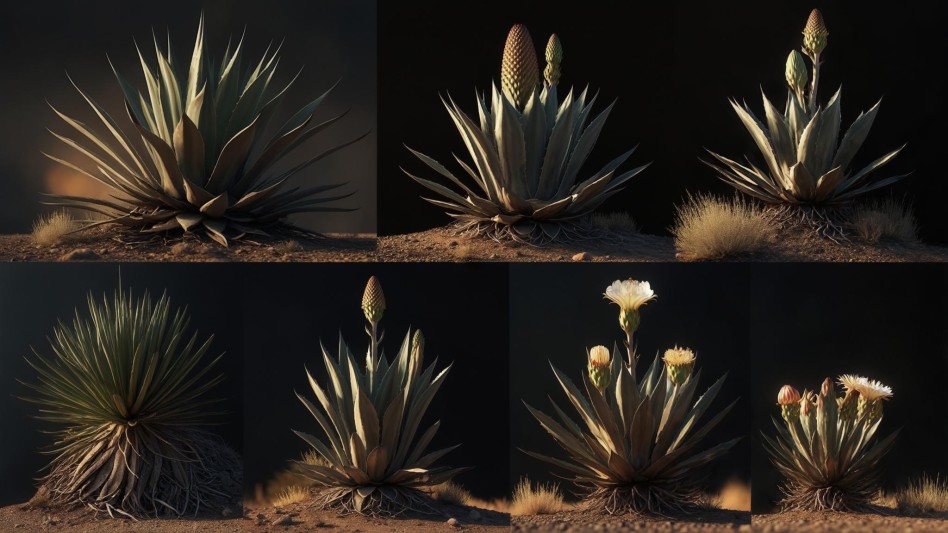
The Utah agave at the Denver Botanic Gardens is reaching its 'grand finale' as it enters the death bloom phase. This remarkable 25-year-old plant, locat...
The Utah agave at the Denver Botanic Gardens is reaching its ‘grand finale’ as it enters the death bloom phase. This remarkable 25-year-old plant, located in the Roads Water-Smart Garden, has been a symbol of resilience in the face of numerous challenges, from hailstorms to extreme weather fluctuations. Dan Johnson, a horticulturist with nearly three decades of experience at the Gardens, highlights the plant’s remarkable journey and survival through various adversities.
The Utah agave, a subspecies known as the Kaibab agave, draws its name from the Kaibab Plateau on the northern rim of the Grand Canyon. As it nears the end of its life cycle, the agave sends out a striking 12-foot stalk resembling asparagus from its spiny base. This phase presents the plant with its only opportunity to reproduce, showcasing a spectacular natural display.
A Grand Finale in Bloom
While the process may seem bittersweet, Dan Johnson views the agave’s ‘death bloom’ as a grand finale rather than a somber event. This stage not only fascinates visitors but also serves as an educational moment, shedding light on the plant’s life cycle and the importance of botanical preservation. The agave’s towering stalk, adorned with yellow flowers, stands as a testament to nature’s beauty and resilience.
Seeds of Growth and Possibilities
Horticulturists are optimistic about the agave’s potential to produce seeds that can be germinated to cultivate new plants. However, uncertainties linger about pollination, especially without another agave in bloom nearby. Despite this, the plant’s bloom is expected to last through the autumn and possibly into the winter, offering visitors a prolonged opportunity to witness this natural wonder.
Discovering Nature’s Marvels
For those planning a visit to the Denver Botanic Gardens, the Utah agave in its ‘death bloom’ can be found in the Roads Water-Smart Garden near the York Street entrance. The plant’s lifecycle serves as a reminder of the beauty and diversity of the botanical world, captivating audiences of all ages with its awe-inspiring transformation.
Source of the article: gazette.com